Plan everyday and inter-island transport
Compare the complete journey, verify terminals and timetables, and keep a workable alternative if a connection falls through.
By ExpatShield Editorial · Last reviewed
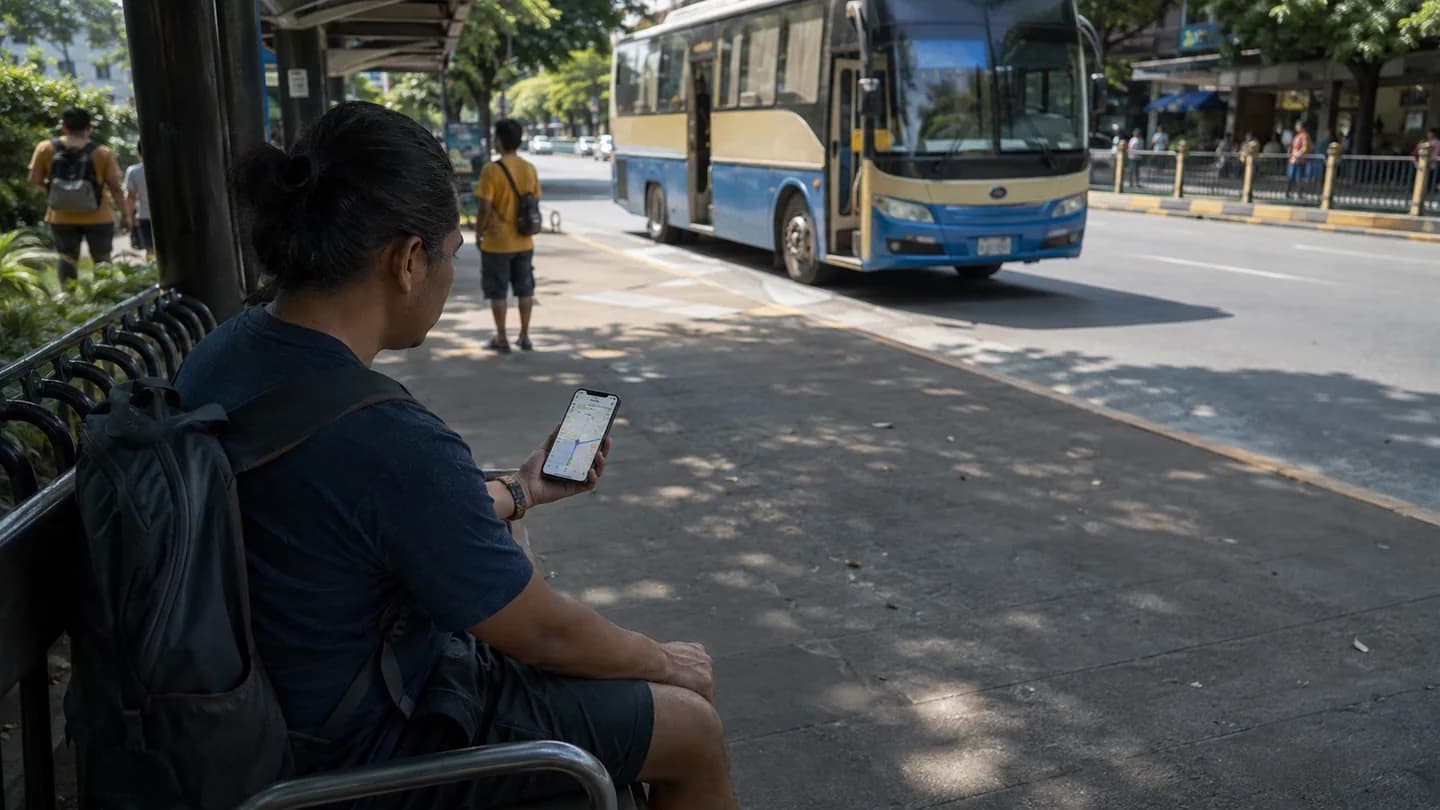
Divide the journey into real steps
Start with the door-to-door trip: reaching the pickup point, waiting, traveling, transferring and reaching the final address. Write down the exact airport, port or bus terminal. Similar destination names do not prove two services use the same terminal, and a cheap ticket can become inconvenient once a difficult transfer is included.
For ordinary city journeys, compare walking conditions, available licensed services, pickup rules and the return trip at your actual travel time. If you use a booking app, confirm the vehicle and driver details in the app before boarding. Agree the destination and understand the displayed or properly quoted payment arrangement. Avoid giving a stranger unnecessary account or identity information to arrange a simple ride.
Compare transport modes by constraints
| Journey type | Questions to settle |
|---|---|
| Flight | Correct airport and terminal, baggage, check-in and connection terms |
| Ferry | Exact port, current sailing, baggage and weather cancellation process |
| Bus | Departure terminal, stopping pattern and arrival point |
| Taxi or booked ride | Pickup point, vehicle identity, payment and return availability |
Check the operator's current timetable and conditions directly. An old blog's fare or departure time is a prompt to investigate, not an operating schedule. Tell the operator about mobility needs, children, pets or unusual baggage before buying, so any accommodation can be confirmed while alternatives are still possible.
Leave room for a missed connection
Ask what happens if an incoming flight, ferry or bus arrives late. Separate tickets may have different protection from a through booking; read the actual terms. Identify the next usable service, accommodation near the terminal and the cost of rearranging the final leg. If the fallback would miss an essential appointment, consider arriving earlier or staying overnight rather than depending on the tightest possible transfer.
PAGASA weather information includes hazards beyond wind signals. Check the advisory relevant to the route, and reconfirm operations with the carrier. Do not interpret the absence of a particular signal as confirmation that a sea crossing or road is operating normally.
Keep the trip recoverable
- Save tickets, the named terminal and operator contact offline.
- Keep essential documents, prescribed supplies and a way to pay accessible.
- Share the practical itinerary with someone you trust if useful.
- Confirm the return or onward service before leaving a well-connected location.
- Keep delay notices and expense receipts if a dispute arises.
CAB publishes air-passenger rights and a complaint portal. Use the current terms for the specific disruption rather than assuming every weather delay creates the same compensation. For another transport mode, use the operator and relevant authority's process. This is travel information only; timetable, safety and passenger conditions must be checked for the actual service.
Read next
Plan an island or regional trip · Avoid common travel and payment scams.
Use the PPA port-office card for terminal questions and the CAB passenger-rights card for a disrupted flight. For a move with several connections, relocation and field support can help organize the practical itinerary.
Sources and direct attribution
- CAB complaint portal accessed September 5, 2026
- Civil Aeronautics Board passenger rights accessed September 5, 2026
- PAGASA tropical cyclone wind signals accessed September 5, 2026