Pack a practical emergency go-bag
Choose essentials your household can carry, keep documents and contacts accessible, and test the bag before you need it.
By ExpatShield Editorial · Last reviewed
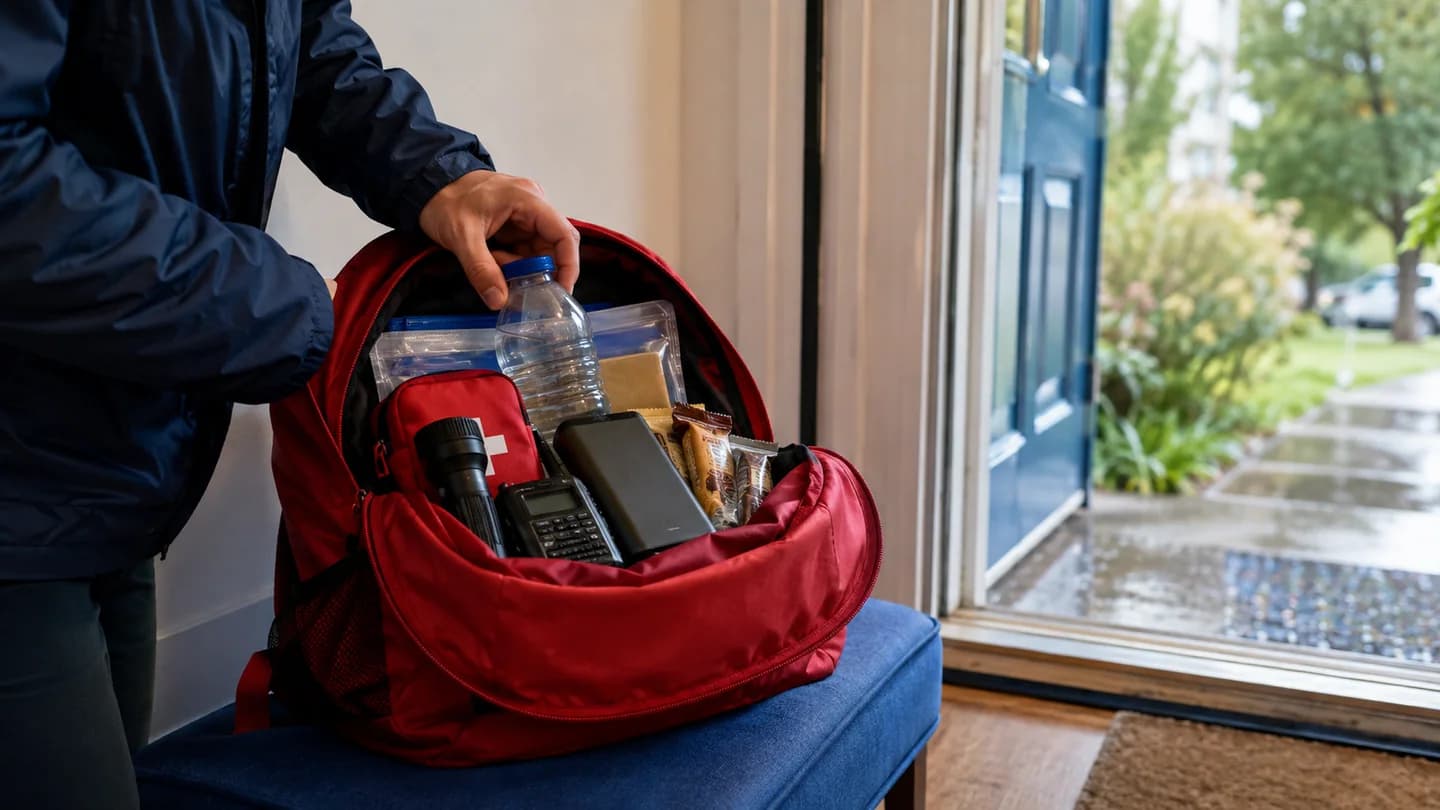
Choose who will carry it
Begin with the person who will use the bag and the route they may need to take. A bag suitable for a healthy adult may be impractical for someone using a mobility aid, carrying a child or managing a health condition. Pack it, lift it and walk a realistic short route while conditions are calm. Remove or redistribute items if carrying it would prevent safe movement.
Keep the bag in an accessible place and let the household know where it is. Portable evacuation items serve a different purpose from a larger supply kept at home. Do not overload the bag with everything you own because a checklist sounds comprehensive.
Build around essential functions
| Function | Items to consider |
|---|---|
| Identity and contact | Protected document copies, offline contact card and useful addresses |
| Communication and light | Charged phone, charging option, flashlight and suitable radio |
| Food and water | Manageable supplies appropriate to the household and conditions |
| Hygiene and weather | Basic hygiene items and clothing suited to the likely route |
| Personal care | Prescribed supplies discussed with a clinician and necessary aids |
| Dependents | Child, mobility, communication or pet needs specific to your household |
Protect important papers from water and avoid carrying unnecessary originals or financial records if a suitable copy meets the purpose. Keep the information that might help a trusted companion support you, but do not leave private records exposed in a public shared bag or online checklist.
Plan power and payment access
Test the charging equipment with the actual phone and cable. Check how you will receive official advisories if mobile data is weak. Carry an appropriate accessible payment backup based on your route, while keeping the household's entire reserve separate from one portable wallet.
Ask a clinician or pharmacist about prescribed supplies, storage and any personal-care planning that needs professional advice. This guide does not specify medical quantities or substitute household items for treatment. Include the contact details for the provider or assistance service you would call about your own situation.
Maintain a bag you understand
- Label the bag's purpose and check who can carry it.
- Make a short inventory with expiry or inspection dates where relevant.
- Test lights, cables and the communication plan.
- Replace used, damaged or expired items promptly.
- Revisit the contents after a household change, move or upcoming local risk period.
Use current PAGASA and local instructions to understand developing conditions; packing a bag is not a reason to remain in a place after an evacuation instruction. Keep the contact plan beside the packing list so equipment and decisions work together. This is emergency information only. The best bag for your household is one you can carry, locate and use, with professional advice for needs a general article cannot assess.
Read next
Prepare your home for emergencies · Make a local emergency contact plan.
Use the Red Cross kit checklist to identify gaps, then check that the packed bag is practical to carry. Resilient communications can help plan how contacts, devices and backup power fit into that portable setup.
Sources and direct attribution
- PAGASA tropical cyclone wind signals accessed September 5, 2026
- U.S. State Department Philippines information accessed September 5, 2026