Make a local emergency contact plan
Keep national and local contacts, your exact address and a household check-in plan available when your phone or internet is unavailable.
By ExpatShield Editorial · Last reviewed
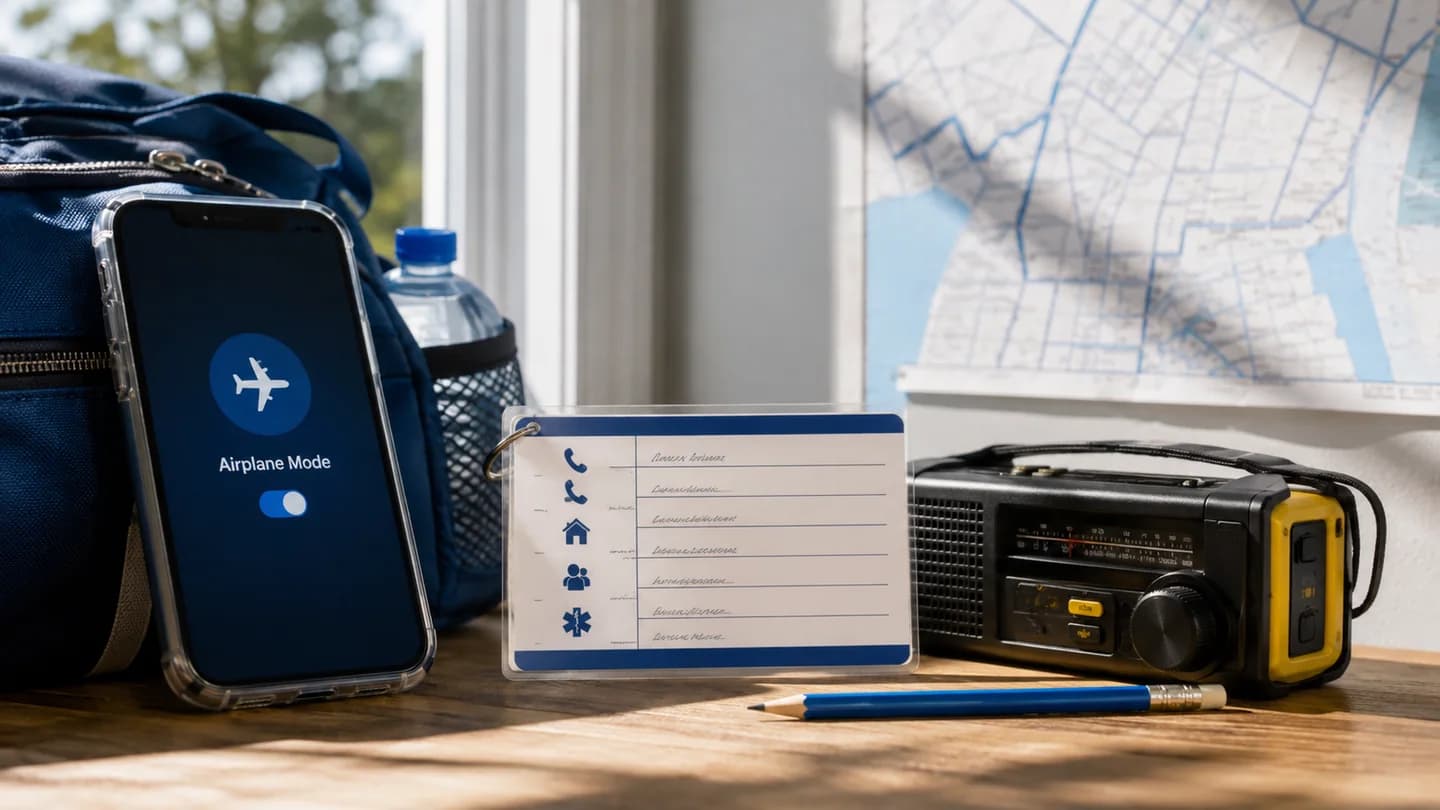
Start with the address where you are staying
Write the building, unit, street, barangay, city and a useful landmark in a form someone else can read. Add the correct entrance and any access instruction that would help a responder reach you. Save it offline and keep a paper copy where household members can find it. A map pin alone may not explain the entrance to a large building or a property on a smaller road.
The national emergency number listed in the Philippines country guidance is 911. Also identify the local contacts relevant to your address. National access does not establish the availability or response time of a particular local service. ExpatShield is not an emergency response provider, and its support chat should not be your emergency contact.
Complete a local contact card
| Contact slot | Fill in for your location |
|---|---|
| National emergency | 911 |
| Building or accommodation | Security or responsible person and access instructions |
| Local disaster office | Current city or municipal contact and advisory channel |
| Nearby emergency care | Facility, phone, entrance and backup route |
| Embassy or consulate | Your nationality's current emergency contact |
| Trusted person | Number and agreed action after a missed check-in |
Use the institution's current official page or published office number to verify a listing; do not call an emergency line just to test it. Ask your accommodation about the local process during an actual incident. Travelers who are not U.S. citizens should use their own embassy contacts rather than copying the U.S. consular details from the linked country page.
Agree what happens when contact is lost
Choose a meeting point close to home and an alternative if the immediate area is inaccessible. Decide who contacts whom, when a missed check-in becomes a concern and which information the trusted person should have. A plan such as “check in by this time; then try these contacts” is more useful than “keep in touch.”
Include children, mobility needs and anyone who may need help understanding instructions. Keep insurer or assistance contacts accessible where relevant, and decide which private details you want a trusted person to hold. Avoid putting full passport, financial or medical records in a shared public document.
Refresh the plan when the location changes
- Update the address and local contacts after moving or starting a regional trip.
- Check the household can find the offline copy.
- Review weather advisories and accommodation instructions relevant to the route.
- Replace a contact that has changed rather than keeping it as an unexplained backup.
The Philippine Commission on Women referral page is an additional resource for its stated violence-against-women and gender-based-violence scope; it is not a guaranteed universal response service. This is emergency information only. Follow current local instructions and seek immediate help through the appropriate channel when there is danger.
Read next
Prepare your home for emergencies · Pack a practical emergency go-bag.
Use the Red Cross preparation card to connect your contact list with an evacuation plan. Resilient communications can help scope offline access, spare power and backup connectivity before an outage.
Sources and direct attribution
- PAGASA tropical cyclone wind signals accessed September 5, 2026
- Philippine Commission on Women referral contacts accessed September 5, 2026
- U.S. State Department Philippines information accessed September 5, 2026