Prepare your home for emergencies
Check the hazards relevant to your address, learn local instructions and make a practical household plan for evacuation or disruption.
By ExpatShield Editorial · Last reviewed
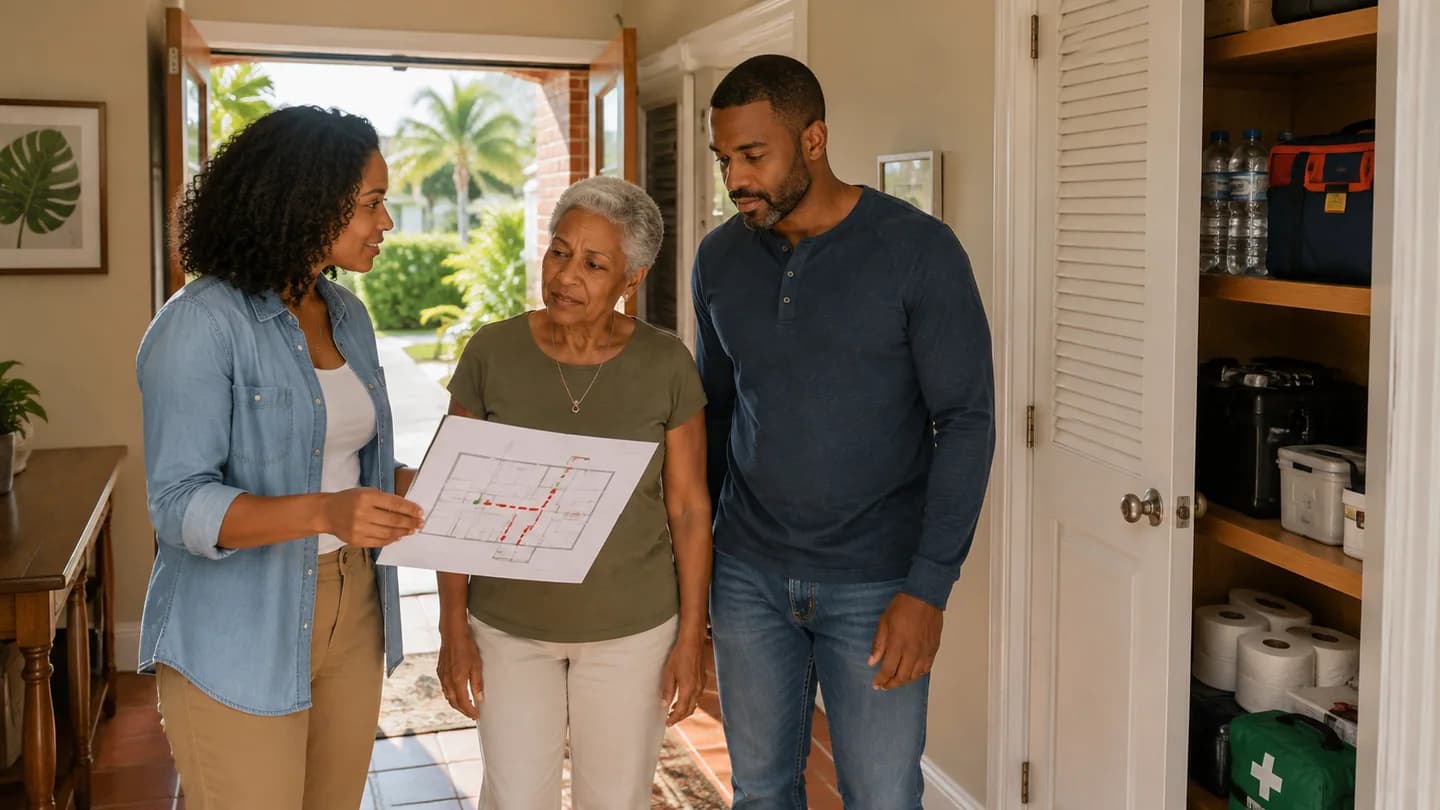
Learn what applies to this address
Ask the building or accommodation manager about emergency exits, assembly points, alarms and local evacuation instructions. Walk the normal escape route while conditions are calm and identify an alternative where one is provided. Notice whether household members can use it with their mobility, communication or care needs. Do not assume the plan from your previous home applies to a new building.
Use PHIVOLCS hazard maps to screen relevant geological hazards such as shaking, fault rupture, liquefaction, landslides, tsunami or volcanic hazards. A map is a starting point for location questions, not a structural assessment. Ask the responsible local office or a qualified professional to address uncertainties that affect the property or route.
Follow the hazard, not a single headline
PAGASA's wind-signal explainer covers wind threats; rainfall, flooding, gale and storm-surge information are separate products. Check the current advisories relevant to the address and any journey you plan. No wind signal is not an all-clear for every other hazard. Keep a way to receive local instructions even if your usual internet connection stops working.
| Situation to plan for | Preparation question |
|---|---|
| Severe weather | Where will you follow official advisories and local evacuation orders? |
| Earthquake-related hazard | Which local guidance and assembly point apply to the building? |
| Fire | Where are the exits and what instructions does the building provide? |
| Urgent health need | What contact and route can your household actually use? |
| Utility interruption | How will you manage essential lighting, communication and personal needs? |
Detailed movement, firefighting or medical instructions should come from current official guidance and qualified training. Do not improvise a hazardous intervention because you have read a general planning article.
Prepare both a bag and home supplies
A portable go-bag supports leaving; supplies kept at home support a disruption when staying is appropriate under local instructions. Tailor water, food, hygiene items, charging options and prescribed supplies to the household, storage conditions and advice you receive. Include practical needs for children, mobility aids and pets rather than using a generic adult packing list unchanged.
Keep document copies and emergency contacts accessible without exposing unnecessary private information. Decide who carries which item and test whether the bag is manageable. A bag too heavy for its intended user needs adjustment before it is useful.
Rehearse the ordinary parts
- Find the contact card and explain the meeting points to the household.
- Check that essential lights and charging equipment work.
- Review expiry dates and replace items after use.
- Revisit the plan before the relevant local risk season and after a move.
- Check changing advisories when conditions develop.
This is emergency information only. Use the appropriate emergency channel for immediate danger and follow the instructions of the local authorities responsible for the incident.
Read next
Pack a practical emergency go-bag · Make a local emergency contact plan.
A household power plan starts with the loads you need to keep running and for how long. The solar screening card supports early site questions; solar and backup power can help scope those needs, while structural and electrical design require qualified professionals.
Sources and direct attribution
- PAGASA tropical cyclone wind signals accessed September 5, 2026
- PHIVOLCS hazard maps accessed September 5, 2026
- U.S. State Department Philippines information accessed September 5, 2026